
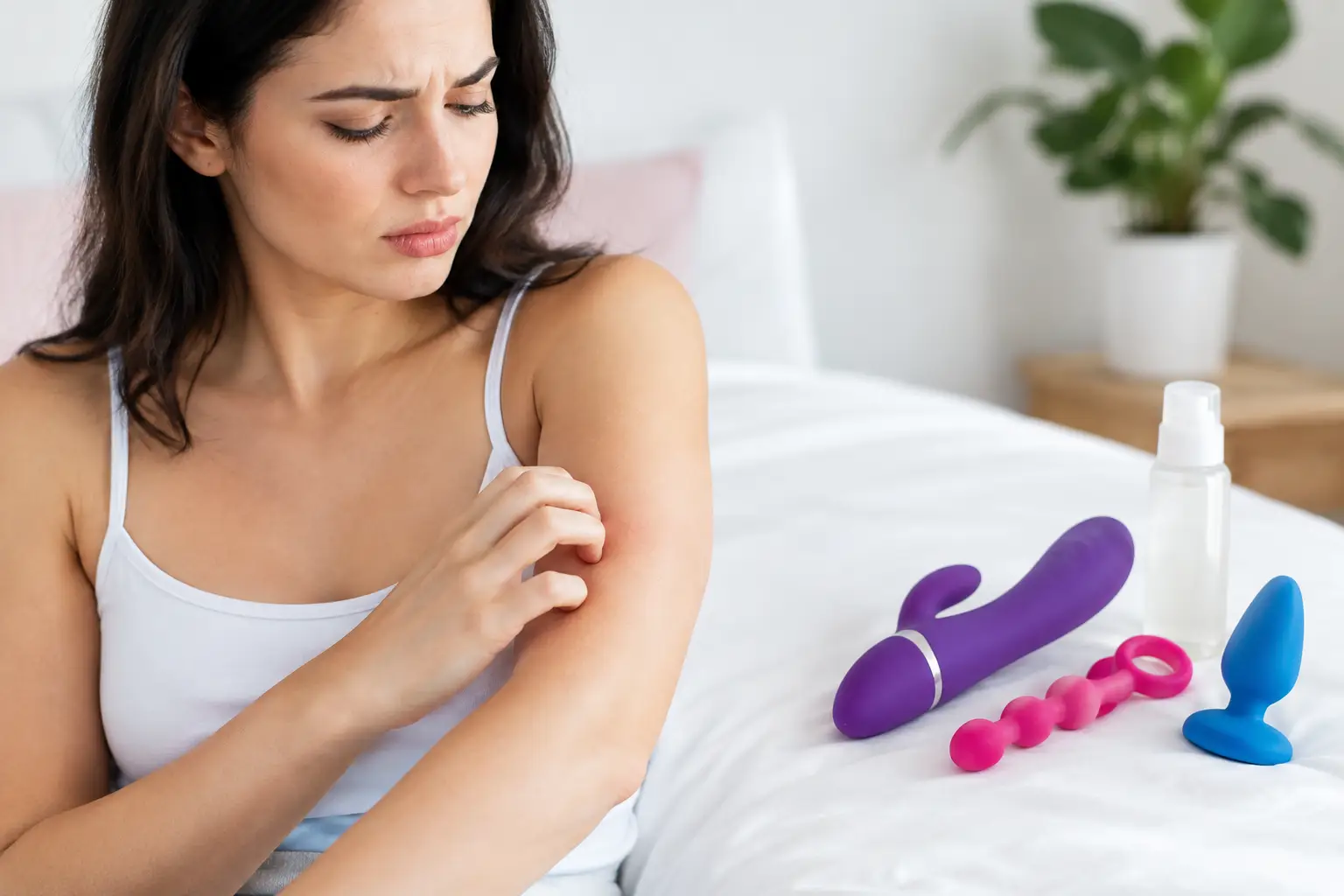
That sudden itch, burning sensation, or rash after using a favorite vibrator can turn a moment of pleasure into a very real worry. Sex toy allergies are possible, but they are not the only explanation. Friction, a new lubricant, leftover cleanser, or a material that does not agree with your body can all cause irritation. The good news: you do not need to give up on joyful exploration. You may just need a little body detective work and a better match for your skin.
Your comfort is not an afterthought. It is part of what pleasure should feel like: safe, affirming, and fully yours.
Are Sex Toy Allergies Really the Issue?
A true allergy happens when your immune system reacts to a substance. It may show up as itching, redness, swelling, hives, a rash, or tenderness where the product touched your skin. Symptoms can appear quickly, though delayed reactions can happen too.
Irritation is more common and can look similar. Sensitive vulvar, vaginal, anal, or penile tissue may react to too much friction, a highly fragranced product, a harsh soap, or a lubricant with ingredients your body dislikes. Unlike an allergy, irritation does not always involve an immune response. Still, it deserves the same care and attention.
The timing can offer clues. If discomfort started after adding a new toy, lube, toy cleaner, condom, or massage oil to your routine, that newcomer is worth investigating. If the toy felt fine before but now stings after longer sessions, dryness or friction may be the bigger factor. Bodies also change with hormones, medications, stress, infections, and skin conditions, so a product that once felt great may not always feel the same.
Common Triggers Behind Sex Toy Allergies
The material of a toy matters, especially for products that come into direct contact with sensitive areas. Not every item labeled “soft” or “silky” offers the same level of transparency or body safety.
Latex is a well-known allergen. If you have a latex allergy or suspect one, avoid latex toys and check accessories carefully, including condoms, harness components, and gloves. A reaction can range from local itching to more serious symptoms, so it is not something to push through.
Some people are sensitive to rubber blends, plastics, dyes, or additives in lower-quality materials. Soft, porous materials can also be harder to clean thoroughly. That does not mean every porous toy will cause a reaction, but it does mean the material can hold onto bacteria, oils, or cleaning residue that may irritate delicate skin.
Fragrance is another frequent troublemaker. A scented toy cleaner, flavored lubricant, perfumed massage oil, or novelty product may seem fun, but fragrance can be rough on intimate skin. The same goes for warming, cooling, tingling, and “enhancement” formulas. Those sensations are intentional, yet they can feel like burning or create inflammation for people with sensitive skin.
Lubricant ingredients deserve a close look too. Some bodies dislike glycerin, propylene glycol, certain preservatives, flavorings, or botanical extracts. Oil-based lubricants can break down latex barriers, while silicone-based lubricant can damage some silicone toys. Compatibility affects both your product and your comfort.
Signs You Should Pause Right Away
A little temporary pinkness after energetic play can happen, particularly when there was pressure or friction. Pain, persistent burning, or swelling is your body asking for a pause.
Stop using the toy and any products involved if you notice ongoing itching, a rash, hives, unusual swelling, blisters, peeling skin, or pain that does not settle. Gently rinse the external area with lukewarm water. Skip scrubbing, douching, fragranced wipes, and random home remedies, which can make irritated tissue angrier.
Seek urgent medical care for trouble breathing, facial or throat swelling, dizziness, widespread hives, or a rapid, severe reaction. Those can be signs of a serious allergic response. For symptoms that are uncomfortable, recurring, or not improving, a clinician can help rule out an allergy, yeast infection, bacterial vaginosis, dermatitis, or a sexually transmitted infection. There is no shame in getting answers. Sexual wellness is health care.
How to Find the Likely Culprit
When your body is calm again, think back to what changed. Consider the toy material, lubricant, cleanser, barrier method, massage product, and even laundry detergent used on towels or bedding. It can be tempting to blame the toy immediately, but several products often overlap during play.
Reintroducing products one at a time, after symptoms have fully resolved, makes patterns easier to spot. Do not test a suspected allergen on genital skin. If you want to check how your body reacts to a new lubricant or external product, a small patch test on less sensitive skin, such as the inner arm, may offer some information. It cannot guarantee genital compatibility, and it is not a safe test for anyone with a history of serious allergic reactions.
Keep a simple note on your phone if reactions have happened more than once. Write down the product, ingredients or material, where it was used, whether a barrier was used, and how long symptoms lasted. That record can make a conversation with a dermatologist, gynecologist, urologist, or primary care clinician much more productive.
Choosing Materials That Put Comfort First
For many people, nonporous materials are a confident place to start. Body-safe silicone, stainless steel, glass, and properly sealed ceramic are generally easier to clean and less likely to trap residue than porous materials. They also tend to be better long-term investments when cared for correctly.
Silicone is a popular choice because it can be soft, flexible, and easy to clean. Look for clear material information rather than vague claims. A reputable product description should tell you what the toy is made from, not hide behind words like “jelly,” “realistic,” or “skin-like” without specifics.
There are trade-offs. Stainless steel and glass are nonporous and can be temperature-play friendly, but their firm feel is not for everyone. Silicone is wonderfully versatile, but it should generally be paired with water-based lubricant unless the manufacturer confirms compatibility with silicone lube. If you love the feel of a softer, porous toy, using a compatible condom over it can add a protective layer and simplify cleanup.
A Gentler Routine for Sensitive Skin
The right toy is only half the equation. Use plenty of a lubricant that agrees with your body, especially during longer sessions or any kind of penetration. More glide often means less friction, and less friction means fewer opportunities for tenderness and irritation.
Clean toys before and after use according to the material and manufacturer instructions. For many nonporous toys, warm water and mild, unscented soap are enough. Rinse thoroughly and allow the toy to dry completely before storing it. Harsh household cleaners, heavily scented soaps, and antibacterial products can leave residue that does not belong near intimate skin.
Avoid sharing toys without cleaning them between partners or body parts. If a toy is porous, difficult to clean, or being shared, a new condom can offer extra protection. This is not about fear or being fussy. It is about caring for your body with the same intention you bring to every other part of self-care.
You Deserve Pleasure Without Guesswork
A reaction does not mean you are “too sensitive” or doing intimacy wrong. It means your body is communicating, and listening is powerful. Start with transparent materials, simple formulas, and products designed with body safety in mind. Give yourself permission to go slowly, use more lube, and retire anything that repeatedly leaves you uncomfortable.
At Saphire’s Toys, we believe shame-free pleasure includes asking practical questions and choosing what makes you feel secure in your own skin. Your exploration can be bold, tender, playful, or all three. It should never require ignoring what your body is trying to say.



Be the first to comment