
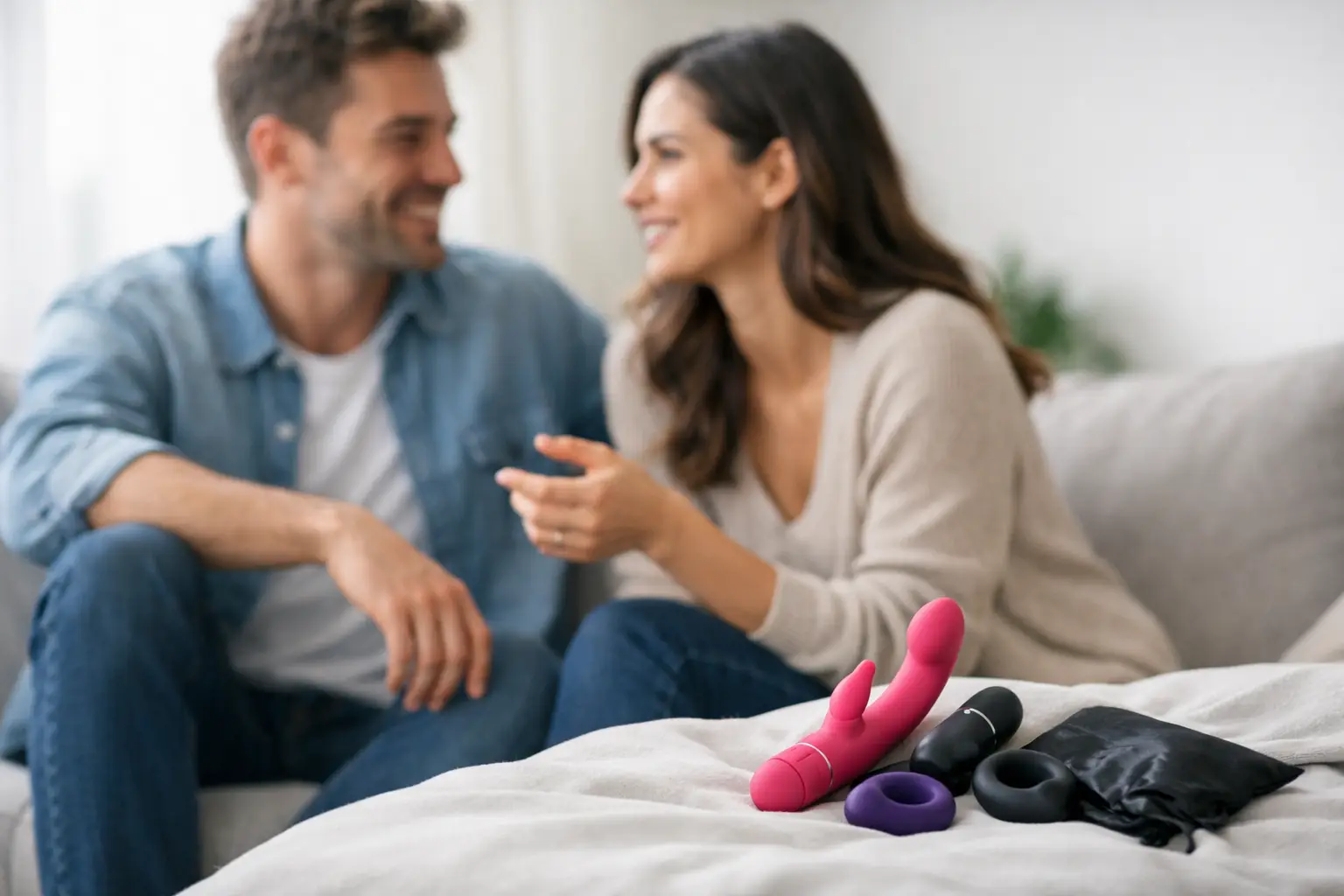
Bringing up sex toys can feel oddly bigger than it is. You might be totally comfortable with the idea, but still freeze when it comes to saying the words out loud. If you’ve been wondering how to talk to your partner about sex toys, you’re not being dramatic – you’re being human. Conversations about pleasure can stir up vulnerability, old assumptions, and fears about being misunderstood.
The good news is that this talk does not have to be awkward, heavy, or relationship-defining in a scary way. In many cases, it can actually open the door to more honesty, more play, and more confidence between you. The goal is not to pitch a product like a salesperson. It’s to invite your partner into a conversation about shared pleasure, curiosity, and what helps both of you feel good.
Why this conversation feels so loaded
Sex toys are still wrapped in a lot of cultural baggage. Some people hear “toy” and immediately think replacement, dissatisfaction, or pressure. Others feel interested but embarrassed to admit it. If your partner has never talked openly about pleasure, they may not know how to respond right away.
That does not mean the idea is wrong. It just means the topic touches identity, desire, and insecurity all at once. A vibrator might feel exciting to one person and intimidating to another. A couples toy might sound playful, or it might raise questions like, “Am I enough?” That emotional layer is why your approach matters more than having the perfect script.
How to talk to your partner about sex toys without making it weird
Start outside the bedroom. Timing changes everything. Bringing it up in the middle of sex can work for some couples, but for many people it creates pressure to react instantly. A calmer moment – on the couch, during a walk, or while relaxing together – gives both of you room to actually talk.
Keep your opening simple and warm. You do not need a dramatic lead-in. Try something like, “I’ve been thinking it could be fun to explore something new together,” or “I’m curious about sex toys and wanted to see how you feel about that.” That kind of wording is inviting rather than loaded. It says, we’re exploring, not, you’re failing.
It also helps to center connection instead of deficiency. If your partner hears the conversation as criticism, they may shut down before you even get to the real point. Be clear that this is about adding to your intimacy, not fixing a broken person. Pleasure products are tools, not scorecards.
Reassure first, then get specific
A lot of people need reassurance before they can get curious. If you sense hesitation, say what you mean plainly. “This isn’t because anything is missing,” is a powerful sentence when it’s true. So is, “I’m already into you – I just think this could be fun to try together.”
Then get specific enough to make the idea feel less abstract. “Sex toys” can mean a hundred different things, and your partner may be reacting to a mental image that has nothing to do with what you actually want. Maybe you’re interested in a small vibrator during foreplay, a wearable couples toy, a simple massage oil, or something beginner-friendly that doesn’t feel intimidating. Once the conversation has shape, it often becomes less scary.
This is where tone matters. Confidence helps, but softness matters too. You’re not asking your partner to perform enthusiasm on demand. You’re giving them a chance to respond honestly.
Expect feelings, not just answers
Sometimes your partner will say, “Sure, let’s do it,” and that’s lovely. Sometimes they’ll need a minute. Sometimes they’ll surprise you with concerns they’ve never said out loud.
If they seem nervous, resist the urge to argue them into comfort. Ask questions instead. “What comes up for you when I say that?” or “Is there anything about it that makes you unsure?” Those questions create safety. They tell your partner they do not have to pretend.
You might hear fears about comparison, body image, performance, or simply not knowing where to start. All of that is workable. What matters is that both people feel heard. A conversation about sexual wellness should feel empowering, not like a debate someone has to win.
It also helps to remember that curiosity and readiness are not always the same thing. Your partner may be open in theory but still need time in practice. That is not rejection. It is just information.
What if your partner feels insecure?
This is one of the most common sticking points, and it deserves tenderness. If your partner worries that a toy means they are not enough, do not brush it off with “That’s silly.” Even if the fear feels misplaced to you, it feels real to them.
Instead, meet it directly. Let them know that pleasure is not a competition. Hands, mouths, bodies, toys, fantasy, communication – these are all parts of the same experience, not rivals. For many couples, toys reduce pressure rather than add it. They can help shift the focus away from performance and toward discovery.
You can also remind your partner that bodies respond differently to different kinds of stimulation. That’s normal. Wanting more options does not mean wanting less intimacy. In fact, being honest about what feels good is often one of the most intimate things you can do.
Make it a shared decision
If your partner is open, the next step is not to rush into buying the boldest thing you can find. Start with something approachable. The best first choice is usually the one that feels exciting to both of you, not the one that sounds most adventurous on paper.
Talk about preferences. Do you want something quiet, small, external, flexible, hands-free, or easy to clean? Are there materials you care about? Do you want something designed for couples, or something one partner uses while the other participates? Body-safe materials and beginner-friendly design can make a huge difference, especially if one or both of you are new.
Shopping together can be part of the intimacy. It turns the experience into collaboration instead of surprise. For some couples, that feels empowering. For others, one person may prefer to browse first and bring a few options to the table. It depends on your dynamic.
A thoughtfully curated shop like Saphire’s Toys can make that process feel less overwhelming because you’re not scrolling through a chaotic wall of products with zero emotional context. When people feel supported instead of bombarded, they tend to communicate more openly.
Set the vibe for the first time
Once you’ve chosen something, lower the stakes. The first experience does not need to be mind-blowing or cinematic. It just needs to feel consensual, curious, and pressure-free.
Talk before you start. Decide what you’re both comfortable with, what you want to try first, and what happens if one of you changes your mind. A toy can be part of sex, foreplay, or solo exploration that you later talk about together. There is no one correct script.
Keep your mindset playful. If you fumble with buttons or laugh because something feels unfamiliar, that does not mean the moment is ruined. New things are often a little awkward before they become natural. Treat that awkwardness as part of learning, not proof that you made a mistake.
If your partner says no
A no is not the end of the conversation forever, but it is a boundary in the moment. Respect it. Pushing rarely creates trust.
That said, not every no means the same thing. Some no’s mean “I’m not interested.” Others mean “I’m nervous,” “I don’t understand the appeal,” or “not yet.” If your partner is willing to keep talking, you can gently explore what is underneath the response. Maybe they are open to a slower entry point, like sensual massage or a conversation about fantasies before any product comes into the picture.
And if they are simply not into it, that matters too. Sexual exploration should be mutual. You can still have honest conversations about your desires without framing one person as more evolved or more adventurous than the other. Real intimacy includes respecting differences.
Keep the conversation going
One talk about sex toys is rarely just one talk. It’s part of a bigger habit of communicating about pleasure with less shame and more honesty. That habit matters far beyond any single product.
The strongest couples are not the ones who magically want all the same things at all times. They’re the ones who can talk about desire without collapsing into embarrassment, defensiveness, or silence. If you can say, “Here’s what I’m curious about,” and your partner can say, “Here’s how that lands for me,” you’re building something real.
Pleasure is not extra. It is part of feeling connected, confident, and fully present in your body. So if this conversation has been sitting on your chest, let it be simpler than your anxiety says it has to be. Start gently. Speak clearly. Stay open. You are not creating a problem by naming your desire – you are making room for more truth, more trust, and maybe a lot more fun.



Be the first to comment