
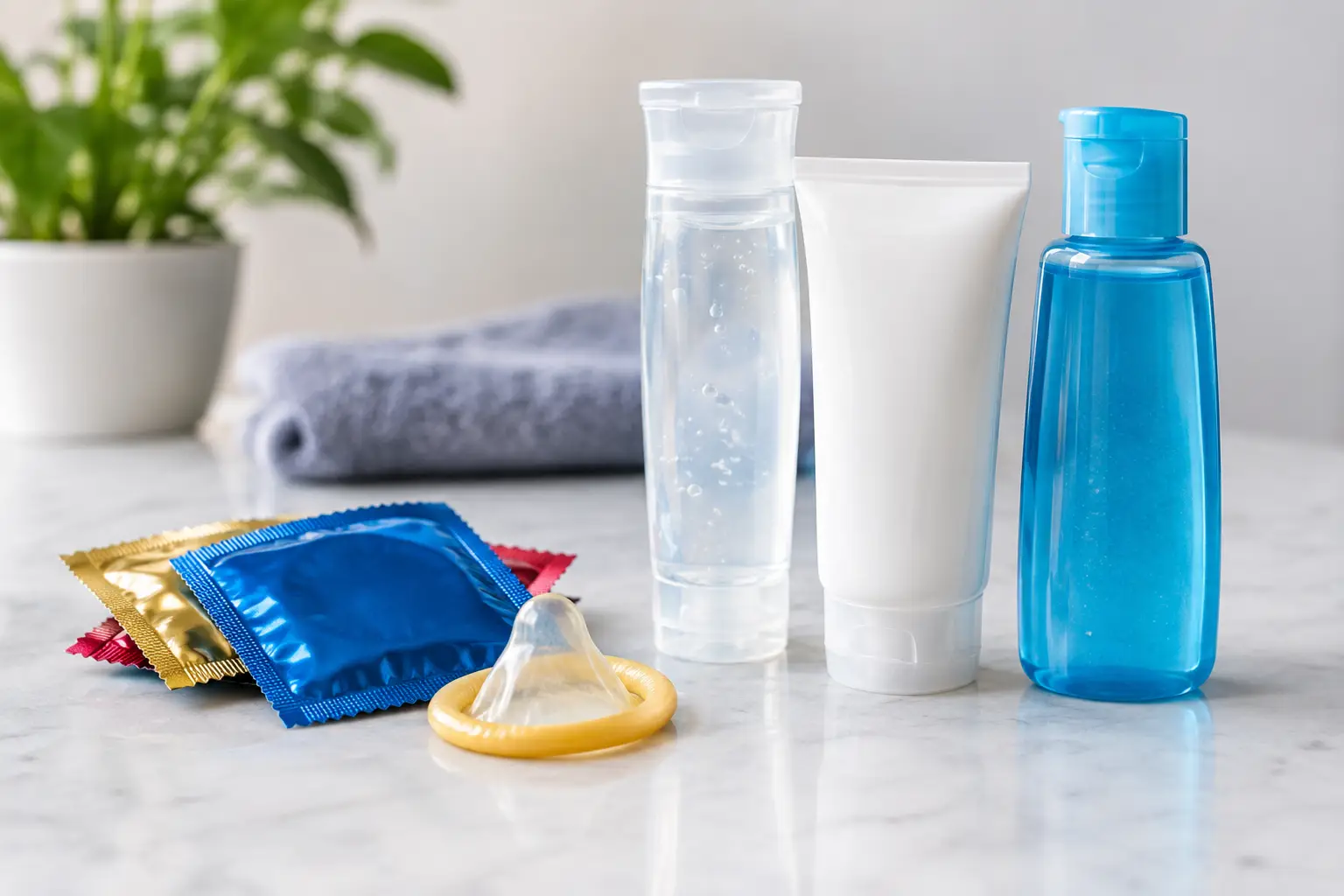
Condoms are a powerful part of caring for yourself and your partners, but the wrong lube can quietly work against them. If you are wondering which lube works with condoms, the short answer is water-based and silicone-based lubricants are usually your safest choices. The fuller answer depends on your condom material, whether toys are joining the fun, and what feels best in your body.
Pleasure and protection belong in the same conversation. A little compatibility knowledge can help condoms feel more comfortable, reduce friction, and support the kind of relaxed, connected intimacy everyone deserves.
Which Lube Works With Condoms?
For most people using latex condoms, choose a water-based or silicone-based lube. Both are compatible with latex and will not weaken the condom when used as directed.
Water-based lube is the easygoing all-around favorite. It works with latex condoms, internal condoms, and all toy materials. It is easy to rinse away, usually feels light and natural, and comes in plenty of textures, from silky-thin to cushiony and thick. The trade-off is that it can dry out during longer sessions, so you may want to reapply.
Silicone-based lube is made for staying power. It is compatible with latex condoms and tends to remain slick much longer than water-based formulas, including in the shower. It is a beautiful option for extended play, anal sex, or anyone who finds themselves constantly reaching for more lube. One big exception: silicone lube may damage the surface of silicone toys. If you are unsure what your toy is made from, water-based lube is the safer call.
Oil-based lubes are not compatible with latex condoms. Oils can break down latex quickly, making the condom more likely to tear or slip. That includes massage oils, coconut oil, body lotion, petroleum jelly, and kitchen oils. They may feel luxurious, but with latex condoms, they are a no.
Start With the Condom Material
Most external condoms are latex, which makes the choice straightforward: use water-based or silicone-based lube, and skip oil-based products. Check the package if you are not sure. “Latex” should be clearly listed in the materials information.
If latex is not right for your body, non-latex condoms deserve a closer look. Polyisoprene condoms are a popular latex-free option, but oil-based lubricants are still not recommended because they can weaken polyisoprene. Water- and silicone-based lubes remain the dependable choices.
Polyurethane condoms are different. Some manufacturers say certain oil-based lubes can be used with polyurethane, but packaging instructions should always have the final word. Condoms vary by brand, and your safety should not depend on guessing. Water- or silicone-based lube is still the simplest, lowest-stress option.
Natural membrane, sometimes called lambskin, condoms may be compatible with oil-based lubricants, but they do not protect against sexually transmitted infections. They are not the right choice when STI prevention is part of your safer-sex plan. If STI protection matters, choose latex or an appropriate non-latex condom instead.
Why More Lube Can Make Condoms Feel Better
Condoms often come pre-lubricated, but that small amount is not always enough for comfort. Adding a compatible lube can reduce friction, help prevent breakage, and make penetration feel more pleasurable. That is not extra or indulgent. It is practical care.
This matters especially for anal play, since the anus does not naturally self-lubricate. A generous amount of water- or silicone-based lube can make the experience more comfortable and reduce the chance of friction-related discomfort. Silicone is often a favorite here because it lasts, while a thick water-based formula is a great option when silicone toys are involved.
For vaginal sex, your natural lubrication can change for so many normal reasons: stress, hormones, medication, postpartum changes, menopause, the pace of arousal, or simply the day you are having. Lube is not a sign that anything is wrong. It is a tool for comfort, confidence, and pleasure.
Watch for Lube and Toy Pairings
If condoms and toys are both on the nightstand, water-based lube offers the most flexibility. It is compatible with every common toy material, including silicone, glass, metal, ABS plastic, and rubbery blends. It is also easy to clean off sheets, bodies, and toys.
Silicone-based lube can be wonderful with non-silicone toys such as glass, stainless steel, or hard plastic. But pairing silicone lube with a silicone toy can cause tackiness, swelling, or damage to the toy’s finish. Sometimes a manufacturer may say a particular pairing is safe, but unless that guidance is clear, do not risk a beloved toy. Choose water-based instead.
Hybrid lubes, which combine water and silicone, can offer a slippery middle ground. They are generally latex-condom safe, but toy compatibility still depends on the product’s formula and your toy material. Read both labels before play, especially if you are using a silicone toy.
Ingredients That Deserve a Second Look
Compatibility is the first question, but comfort matters just as much. A lube can be condom-safe and still not be the best match for your body.
Fragrances, warming ingredients, flavors, and tingling additives can be fun for some people and irritating for others. If you have sensitive skin, are prone to irritation, or are trying lube for the first time, a simple fragrance-free formula is a kind place to start. You can always explore extras later.
Some people also prefer glycerin-free formulas, particularly if they are prone to yeast infections or notice irritation with certain products. There is no universal rule here. Bodies are personal. Pay attention to what feels good during and after use, and stop using anything that burns, stings, or causes persistent discomfort.
Avoid using numbing lubes as a way to push through pain. Pleasure should not require you to ignore what your body is telling you. Slow down, add more compatible lube, communicate, change positions, or pause. Comfort is never something you have to earn.
A Simple Way to Use Lube With Condoms
Apply the condom before any genital contact, then add a few drops of compatible lube to the outside of the condom. If you like, one small drop inside the tip of an external condom can increase sensation for the wearer, but use only a tiny amount. Too much inside may make the condom more likely to slip.
Reapply as needed. If the lube begins to feel sticky, dry, or less comfortable, that is your cue, not a failure. With water-based lube, add a little more product or a few drops of water. With silicone lube, a small amount often goes a long way.
Do not layer an oil-based product over a latex condom, even if you started with a water-based lube. Massage oil and lotion can migrate during play, so keep them away from latex barriers. When you are finished, hold the base of the condom during withdrawal, remove it carefully, and use a new condom for every new act of sex or toy-to-body switch.
Let Your Pleasure Have Standards
The best lube is not the one with the flashiest label. It is the one that supports your condom choice, respects your body, and lets you stay present instead of distracted by dryness or discomfort. Water-based lube is the reliable everywhere option; silicone-based lube is the long-lasting choice when it suits your toys; oil-based formulas stay far away from latex.
At Saphire’s Toys, we believe safer sex and joyful exploration can sit side by side without shame or confusion. Choose what feels affirming, keep a compatible lube within reach, and let your boundaries and comfort lead the way.



Be the first to comment